
Life Science Buffers
Balanced salt solutions and powders used for molecular, protein, nucleic acid, and cell biology applications including cell culture, electrophoresis, ELISA, and chromatography processes; available in a variety of formulations and grades.
Buffer solutions serve to keep pH (acidity or alkalinity) nearly constant in a variety of chemical and biological applications. For example, a bicarbonate buffer helps maintain the pH of blood, a buffered saline maintains cellular contents at a consistent pH level, and buffers help maintain a narrow pH range for enzymes to function correctly.
Most biological samples used in research are kept at a pH of about 7.4. Common biological buffers used for tissue culture include Dulbeccos phosphate buffered saline (PBS), Tris base, HEPES, MOPS, PIPES, and other formulations developed for specific cell lines or applications. Most buffers used in cell culture are also DNase-, RNase-, and protease-free.
The choice of buffer for a particular biological reaction or site depends on several factors:
- Temperature
- Desired or target pH
- Buffer toxicity (to the system)
- Buffer interactions with other system components

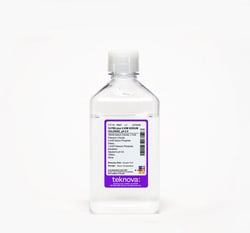
Teknova 1X PBS Solution plus 0.05M Sodium Chloride, pH 2.6. 1000mL, Sterile. 2 pack.
Phosphate-buffered saline (PBS) is a salt solution that is commonly used in physiological and biochemical experiments. It can be used to maintain pH neutrality or to buffer against changes in pH in order to provide optimal conditions for cellular growth and function. The buffering range is between pH 6.8 and 7.4.


Apexbio Technology LLC Annexin V-HF647/DAPI Apoptosis Kit 20assays
Annexin V is a Ca2 -dependent phospholipid-binding protein that specifically binds to phosphatidylserine (PS) Normally PS is localized on the inner leaflet of the cell membrane lipid bilayer During the early stages of apoptosis PS translocates from the inner leaflet to the outer surface of the cell membrane exposing it to the extracellular environment Due to Annexin V s high affinity for PS fluorescently labeled Annexin V (HF647) can be used as a fluorescent probe to detect apoptotic cells through flow cytometry or fluorescence microscopy with staining taking only 10-20 minutes DAPI specifically binds double-stranded DNA producing blue fluorescence and normally cannot penetrate intact cell membranes However during late apoptosis or in dead cells DAPI can pass through compromised membranes to stain the nucleus Concurrent staining with Annexin V-HF647 and DAPI allows differentiation of cells at different stages of apoptosis and identification of dead cells


Alkali Scientific CellPro™ PBS Buffer, 1X, p.H 7.2, 1L, 1 Liter, 10/Case
CellPro™ PBS Buffer, 1X pH 7.2, 1 Liter Phosphate-buffered saline (PBS) is a balanced salt solution that is used for a variety of cell culture applications, such as washing cells before dissociation, transporting cells or tissue samples, diluting cells for counting, and preparing reagents. PBS is formulated without calcium and magnesium for rinsing chelators from the culture before cell dissociation. Concentrated forms of Gibco™ PBS may require pH adjustment at the time of dilution.
Alkali Scientific PBS 1X Solution [Phosphate Buffered Saline 1X Sterile Solution], 500 Milliliters
PBS (Phosphate Buffered Saline) 1X Solution is a sterile, isotonic buffer solution used in a variety of biological applications. The 500 mL volume is convenient for smaller-scale applications, including cell culture, molecular biology, and immunology experiments. PBS helps maintain the osmotic balance and pH of biological systems, preventing cell lysis or shrinkage. It is frequently used to wash cells, dilute samples, and prepare reagents for biochemical assays. PBS is an essential component in maintaining physiological conditions in in vitro studies and ensuring that cells, tissues, and biomolecules remain stable during handling and experimental procedures.

Teknova 1X PBS Solution, pH 7.4. 500mL, Sterile 8 pack.
1X PBS Solution, pH 7.4. 500mL, Sterile 8 pack.

Apexbio Technology LLC EdU Flow Cytometry Assay Kits (488) 100 tests
EdU Flow Cytometry Assay Kits (488) provides a novel method based on click chemistry specifically CuAAC (copper-catalyzed azide-alkyne cycloaddition) enabling direct measurement of DNA synthesis during the S-phase of the cell cycle The thymidine analog EdU (5-ethynyl-2 -deoxyuridine) can be incorporated directly into DNA strands during DNA synthesis The alkyne group on EdU a biologically inert moiety undergoes highly selective reaction with azide-functionalized dyes via the CuAAC reaction forming a stable 1 2 3-triazole product The unique biological groups on EdU and 6-FAM Azide allow fluorescent labeling of proliferating cell DNA after conjugation enabling imaging with low background and high detection sensitivity The EdU Flow Cytometry Assay Kits (488) use 6-FAM azide to label the DNA of proliferating cells following its reaction with EdU Samples labeled in this manner can be analyzed via flow cytometry (EXC/EMI 496/516 nm)) with green fluorescence

Biotang Inc Carbonate Buffered Saline 5X, pH 9.5. 15 mM Sodium Carbonate, 750 mM Sodium Chloride, pH 9.5. Prepared in 18.2 megohms water and filtered through 0.22 micron filter. BB-535
Carbonate Buffered Saline 5X, pH 9.5. 15 mM Sodium Carbonate, 750 mM Sodium Chloride, pH 9.5. Prepared in 18.2 megohms water and filtered through 0.22 micron filter. BB-535.

Alkali Scientific PIPES Sodium Salt [Piperazine N,N' bis(2 ethanesulfonic acid) sodium salt], 250 Grams
PIPES Sodium Salt (Piperazine N,N' bis(2 ethanesulfonic acid) sodium salt) is a high-purity biochemical reagent provided in a 250G pack. It is widely used as a buffering agent in biological and biochemical assays due to its excellent stability in a wide pH range. The sodium salt form of PIPES is ideal for maintaining stable pH conditions in sensitive biological environments. It is commonly used in molecular biology, protein analysis, and enzyme assays, as it does not interfere with biological systems. PIPES Sodium Salt is also used in chromatographic applications and as a mobile phase additive in high-performance liquid chromatography (HPLC).
Crescent Chemical Co Inc MORPHOLINOETHANE SULFONIC ACID
Morpholinoethane sulfonic acid analytical grade pKa 20 = 6.15. Buffering substance for biochemistry and molecular biology (1). Physical constants (2). Size - 100G Storage Conditions - +15 °C TO +30 °C Catalog Number - 29834.02 CAS 4432-31-9

Bioworld BES, 1M, pH 7.0, 200 mL
BES bufferAlso known as N,N-Bis(hydroxyethyl)-2aminoethanesulfonic acid.Technical Information:pKA (25 C): 7.1Heavy Metals: <0.0005%. Appearance: LiquidBoiling Point : 404.34 °C (Predicted)Density : 1.44 g/cm3 (Predicted)Melting Point: 152-154 °CPH Value: 6.4-7.8
Crescent Chemical Co Inc MORPHOLINOETHANE SULFONIC ACID
Morpholinoethane sulfonic acid analytical grade pKa 20 = 6.15. Buffering substance for biochemistry and molecular biology (1). Physical constants (2). Size - 1KG Storage Conditions - +15 °C TO +30 °C Catalog Number - 29834.03 CAS 4432-31-9

Bioworld ADA (N-(2-acetamido)iminodiacetic acid) Buffer, 0.2M, pH 7.5, 250 mL
Synonym:ADA-Na,N-(2-Acetamido)iminodiacetic acid monosodium salt,N-(Carbamoylmethyl)iminodiacetic acid monosodium saltA zwitterionic buffer used in biological applications including protein isolation and characterizationWarning: For laboratory use only.Not fit for agricultural, household, clinical use or human consumption. Appearance: LiquidPH Value: 7.5

Dojindo Molecular Technologies Inc TES (100G), Good's buffer, CAS: 7365-44-8, pka=7.5, Active pH 6.8-8.2, made in Japan
In biological experiments, it is important to maintain the pH of the solutions used. Buffers, which are mixtures of weak acids and their appropriate conjugate bases, are commonly used in these experiments. Most biological reactions occur when the buffer is at its effective pH range of 6 to 8. Furthermore, the acids and bases used in the biological reaction should not produce chelates with metal ions. For these reasons, Dr. Good developed several aminoethane and aminopropane sulfonic acids that are now widely used for biological research and analysis. Goods buffers have the following characteristics: 1) High water-solubility. 2) Low cell membrane permeability. 3) Consistent acid-base dissociation constants. 4) Low metal chelating capability. 5) High chemical stability. 6) Low absorption spectra in UV and visible regions.